If you’re trying to lose fat, you’ve probably heard this advice many times: “Eat more protein.”
But what exactly is the role of protein in fat loss?
Is it really that important?
The answer is yes — and not just for muscle building.
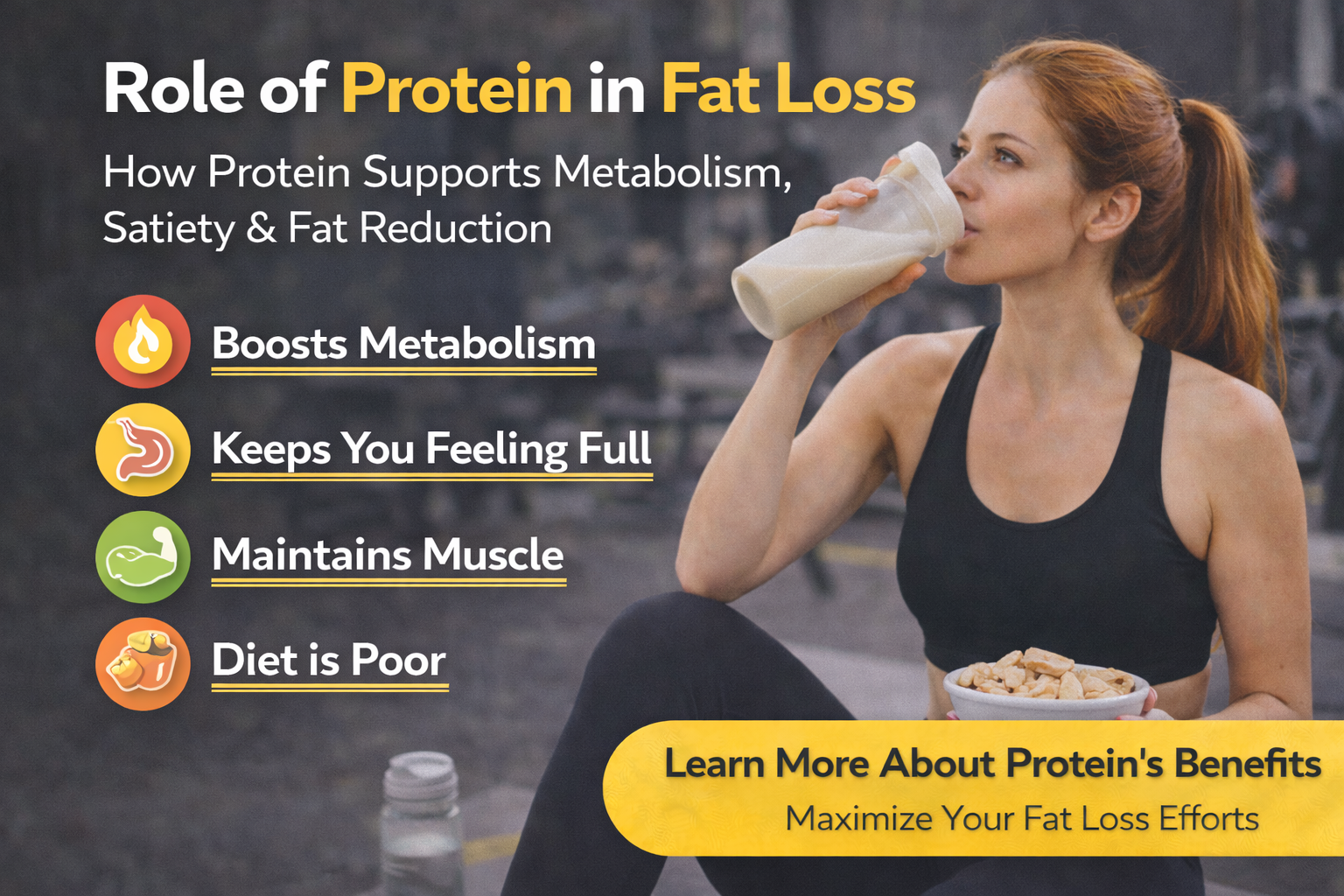
Protein plays a powerful role in boosting metabolism, increasing satiety, preserving lean muscle mass, and improving overall body composition. Let’s understand how it works.
1. Protein Boosts Metabolism
One of the most important roles of protein in fat loss is its effect on metabolism.
When you eat, your body burns calories to digest and process food. This is called the thermic effect of food (TEF).
Protein has a higher thermic effect compared to carbohydrates and fats.
- Protein: burns about 20–30% of its calories during digestion
- Carbohydrates: 5–10%
Fats: 0–3%
This means your body naturally burns more calories when digesting protein.
Over time, this can support better calorie balance and fat reduction.
2. Protein Increases Satiety (Keeps You Full Longer)
Hunger is one of the biggest challenges during fat loss.
Protein helps by:
- Increasing fullness hormones
- Reducing hunger hormones
- Slowing down digestion
Reducing cravings
Higher-protein meals are consistently shown to increase perceived fullness. This makes it easier to control calorie intake without feeling deprived. When you feel full, you’re less likely to overeat.
3. Protein Preserves Lean Muscle Mass
When you’re in a calorie deficit (eating less to lose fat), your body may lose both fat and muscle.
Losing muscle is not ideal because:
- Muscle supports metabolism
- Muscle improves body shape and tone
Less muscle = slower metabolic rate
Higher-protein diets help preserve lean mass while promoting fat loss.
This leads to better body composition — meaning you lose fat, not muscle.
4. Protein Improves Body Composition
Research over the past two decades suggests that higher-protein diets are associated with:
- Greater fat loss
- Better waist circumference reduction
- Improved triglyceride levels
Better cardiometabolic markers
Protein supports not just weight loss — but healthier weight loss.
5. How Much Protein Do You Need for Fat Loss?
For most adults aiming for fat loss:
👉 1.2–1.5 grams of protein per kg of body weight is a practical target.
For example:
- If you weigh 60 kg → 72–90g protein per day
If you weigh 70 kg → 84–105g protein per day
Protein sources include:
- Eggs
- Chicken & fish
- Paneer & tofu
- Greek yogurt
- Lentils & legumes
Soya products
Spreading protein intake evenly across meals helps maximize benefits.
Protein isn’t just for muscle — it plays a key role in appetite control and metabolic health. Getting the right amount can change your results completely. 👉 Want a structured plan that balances protein the right way? Let’s get started.
Common Mistakes with Protein Intake
- Eating most protein only at dinner
- Relying only on protein supplements
- Not adjusting protein intake during calorie restriction
Ignoring total calorie balance
Remember: Protein supports fat loss — but total calorie balance still matters.
Final Thoughts
The role of protein in fat loss goes beyond muscle building. It boosts metabolism, increases satiety, preserves lean mass, and improves overall body composition.
If you are struggling with fat loss, increasing your protein intake — along with strength training and calorie control — can make a noticeable difference.
Fat loss isn’t about eating less.
It’s about eating smarter.
Disclaimer
The information provided in this blog is for educational purposes only and is not intended as medical advice. Please consult a healthcare professional or registered dietitian before making significant changes to your diet or exercise routine.