You’re eating “healthy.”
You’ve reduced sugar.
You’ve tried walking daily.
Maybe even skipped dinner.
Yet the scale refuses to move.
Or worse — it moves down… and then comes right back up.
Here’s the truth no one tells you:
Weight loss resistance is rarely about effort.
It’s about internal stress.
And stress doesn’t just mean emotional stress.
It means:
• Blood sugar instability
• Hormonal imbalance
• Poor sleep
• Irregular meal timing
• Chronic inflammation
• Gut imbalance
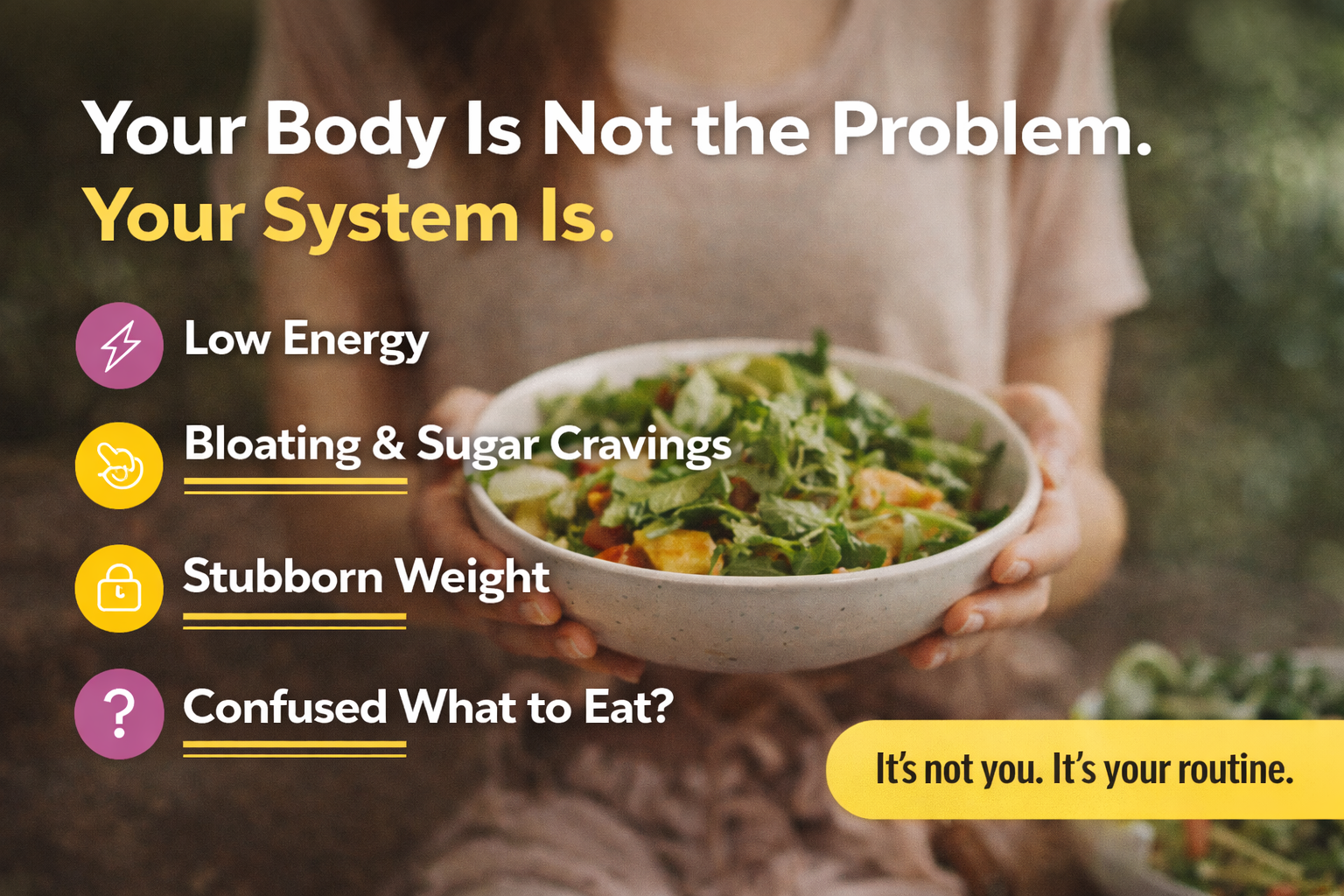
Your body is not stubborn.
It is protective.
Modern Life Is Metabolically Aggressive
Today’s lifestyle quietly works against your metabolism.
You wake up early.
Rush to get ready.
Skip breakfast or grab something quick.
Long gaps between meals.
Coffee replaces food.
Meetings replace movement.
Dinner becomes the largest meal of the day.
Add stress. Add screen time. Add late nights.
Now your body is in survival mode.
When cortisol (stress hormone) stays elevated, your body holds onto fat — especially around the abdomen.
When blood sugar spikes and crashes, cravings increase.
When sleep reduces, insulin sensitivity drops.
And when insulin resistance begins, weight loss slows — even if calories are low.
This isn’t lack of discipline.
This is physiology.
If you’re looking for a meal plan that includes foods you enjoy while supporting your metabolic health, personalized nutrition makes all the difference. 👉 Ready to build a diet plan that works for your body? Book your consultation today.
The Problem With “Eat Less, Move More”
For women 30+, professionals under stress, and individuals managing diabetes or PCOS — eating less can actually slow metabolism further.
Severe calorie restriction signals scarcity.
Your body adapts by:
• Burning fewer calories
• Increasing hunger hormones
• Reducing thyroid efficiency
• Storing fat more efficiently
Which is why extreme dieting often leads to:
Weight regain.
Hormonal disruption.
Fatigue.
Hair fall.
Mood changes.
It’s not failure.
It’s biology responding to stress.
The New Approach: Metabolic Stability
Instead of aggressive dieting, modern nutrition focuses on stability.
Stable blood sugar.
Stable hormones.
Stable energy.
Because when stability increases, fat loss becomes easier.
This means:
✔ Structured meals
✔ Adequate protein
✔ Fiber-rich carbohydrates
✔ Healthy fats
✔ Controlled portions
✔ Proper sleep
✔ Stress management
Weight loss becomes a side effect of balance.
Not punishment.